

Best B2B Intent Data Tools for Telecom Sales: Compare the Signals

Hunter Newby
November 23, 2026
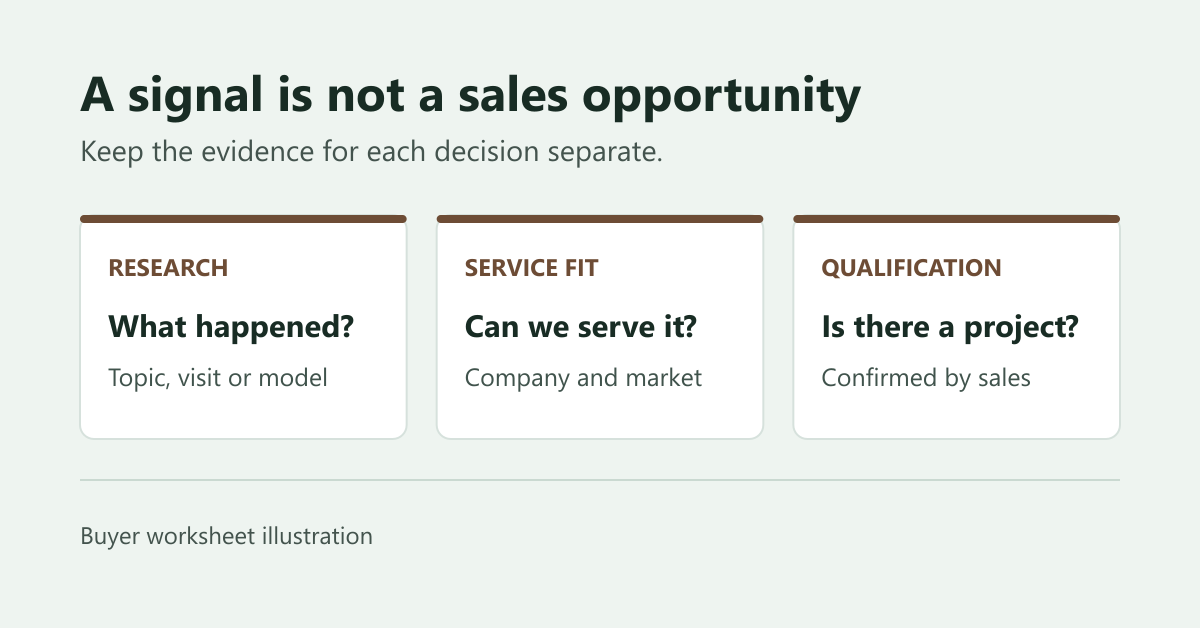
The best B2B intent data tools for telecom sales are the ones that tell a rep why an account appeared on a list and what the rep should verify next. Buying-stage estimates, topic surges, and visits to your own site are different signals. None establishes who made a purchase decision, or whether you can serve the address.
A research spike around dedicated Internet access might come from a buyer evaluating a new office, a consultant comparing providers, or a company preparing a report. Before the lead gets to sales, confirm the organization and offer fit. Before it gets a forecast, confirm the actual project through your normal qualification process.
- Four tools compared by signal
- Check the account and location
- Use the same evaluation for every vendor
- Compare the actual cost and workflow
- Frequently asked questions
Four intent data tools compared by signal and confidence
This comparison uses provider documentation checked November 23, 2026. It is not a hands-on performance ranking, an accuracy audit, or a claim that any tool can identify the person behind an anonymous event.
| Tool | Documented signal | Fit and limit to verify |
|---|---|---|
| Bombora Company Surge | Research topic activity elevated against the organization's own historical baseline in Bombora's monitored sources. | Useful when the topic taxonomy fits the offer. Ask to see relevant topics and account coverage. A surge does not confirm that the activity was on your site or came from the site that needs service. |
| 6sense Predictive | An account-level predictive model combines activity inputs such as CRM, web, keyword and third-party activity to inform intent scores and buying stages. | Useful when sales already works from scored accounts. Check which inputs are present in your account and review the underlying signal before treating a predicted stage as pipeline. |
| Demandbase Intent | Keyword-related account research with strength and trend distinctions. Third-party intent imports are handled separately. | Useful when the team wants keyword groups for account prioritization. Inspect the exact terms, account match and period. Do not count an imported Bombora signal and the same Bombora event elsewhere as two observations. |
| HubSpot Buyer Intent | For website visitor intent, the tracking code lets HubSpot associate some anonymous visits on your site with companies and apply selected criteria. | Useful when reps already use HubSpot and can act on a qualifying visit. Ask which page paths count and how company matches are made. Coverage depends on your tracked site and on a match being available. |
These differences matter more than numerical labels. An account buying stage from 6sense is not the same quantity as an increase in Bombora research, or a qualifying HubSpot page visit. Keep the signal type and date with each record instead of averaging scores into one number.
Check the account and location before a seller acts
Normalize the legal entity, website domain, parent company, and the market where you can serve a buyer. A large enterprise can research at headquarters while the installation is for a different division in a different city. An ISP might show interest in an exchange because its network team is writing a technical comparison, not buying a port.
For a direct Internet access offer, document whether the company fits the business segment and regional footprint. If the actual location is unknown, make it a question to verify rather than assigning a serviceable site. For why local network context changes delivery, see Hunter Newby's research on Internet exchanges and interconnection.
Give every vendor the same evidence check
- Use one approved sample. Compare the same account cohort, offer and markets over the same calendar window. Include relevant providers, resellers and unrelated entities as comparison cases. Use company-level records and follow your organization's data-sharing rules.
- Log the reason each account appeared. Keep the topic or page, date, underlying provider, and match explanation if available. Record unmatched accounts and examples you cannot explain. Do not treat a lack of coverage as lack of demand.
- Review for buyer fit before sending the list. Compare the account to the offer and footprint. Keep the reason for accepting or rejecting the account. Route uncertain or conflicting matches to review, not an automated outreach list.
- Keep the outcome separate. Count reviewed accounts, accepted leads, and independently confirmed opportunities as separate stages. Compare them with staff effort and the total number of accounts evaluated. Duplicate alerts and website visits are not sales outcomes.
In a hypothetical test, two tools surface the same parent company. One imports a third-party interconnection topic for the parent; the other records a visit to a service page from an IP associated with the company. Keep the sources separate, ask which entity and geography matter, and have a rep verify fit before counting either signal as a lead.
Compare the full cost of a usable signal
Price the required plan, data coverage, credits or account limits, CRM connection, implementation and staff review. 6sense offers customized pricing, and Demandbase explains its pricing structure. Ask Bombora for the cost of the topic coverage and delivery you need. HubSpot documents credit usage for some adding and tracking actions; check the subscription and expected credit use for your account before comparing monthly costs.
Start with the lowest-complexity workflow that answers the sales question. A first-party visit can be useful when the website already attracts the right operators. If the question is which eligible accounts are researching an infrastructure topic before visiting, ask for an external sample that covers your markets and terminology. When you are choosing tools for discovery rather than sales qualification, use the separate guide to AI visibility tools for telecom brands.
Frequently asked questions
Does a signal identify the person who is buying?
No. The signals compared here work at the company or account level for this use. A rep still needs ordinary qualification and appropriate contact permission.
Does a high intent score mean the company can buy my service?
No. Confirm whether the relevant entity and service location fit your offer and network coverage.
Are all four products looking at the same data?
No. They combine or report different kinds of research, engagement, and first-party activity. Ask where the exact signal was sourced.
Can two tools report the same research event?
Yes. A source can be sold directly and distributed through another platform. Preserve the provider field and avoid counting duplicated signals as corroboration.
What is the best pilot metric?
Choose a metric for the question you need answered. For sales prioritization, record how many accounts a reviewer accepts and why, separately from verified opportunities and revenue.
Is the site visitor always matched to the right business unit?
No. Company and parent-domain matches can be useful starting points, but the rep still needs to confirm the entity, location, and context.
About the Author

Hunter Newby
Founder, Newby Ventures
Entrepreneur, investor, and interconnection pioneer. Co-founded Telx, conceived the carrier-neutral Meet-Me-Room, and led data center development across the U.S. Now investing in network-neutral infrastructure through Newby Ventures.
Read more about Hunter →