


The Big Apps: My Kind of Connections – The "Meet Me" Series Blows into the Windy City (Chicago)

Hunter Newby
September 1, 2005
Originally published in FATPIPE magazine, September 2005.
by Hunter Newby
Editors' note: Throughout 2004, we used this space to identify the key physical layer carrier interconnection points within the major North American markets. This year the series moves forward to identifying the service providers with the key wholesale enterprise-focused offerings within those markets. And clearly, the key services in the greatest demand by enterprise users today are Ethernet transport and VoIP.
With two of the better known North American carrier hotels and plenty of Ethernet and VoIP services to go around, Chicago is my kind of town. Both 350 East Cermak (Lakeside) and 600-700 South Federal Street (Printers Square) hold the distinctions of being the dominant carrier hotels in the city for interconnections, but their histories differ.
Printers Square is the traditional telecom carrier hotel housing many of the old school PSTN (public switched telephone network) voice switches that service the area. This is good for the VoIP service providers that need direct, local loop-less access for DID (direct inward dial) local phone numbers. Lakeside is the newer, more IP-centric facility and, from an infrastructure and tenant base perspective, is better positioned for enterprise data center-type applications. As Ethernet assists VoIP in getting beyond the carriers to the business, it is interesting to see these two worlds collide.
Both locations have all of the metro fiber access a network operator could want, or need. Access is the key and Chicago has plenty of it. All flavors of metro, regional, long haul and international long haul Ethernet transport flows through the market, giving it all of the benefits of an international gateway but also the travel benefit of being centrally located from the East and West Coasts. This can play a role with international enterprises looking to establish a presence in the United States.
As Ethernet transport gets built out further across the world, being on-net with a foreign LAN (local area network) and all of its applications gets easier. Flat-rate pricing models for national and global Ethernet circuits make distance a non-issue, and as equipment costs decrease and performance increases, enterprises find it easier to build and manage their own networks. As a result, they need less IP transit. This is not to say that there is any lack of demand for public IP, but there definitely is growth coming from the Layer 2 department in the enterprise WAN (wide area network).
Taking a look at the Ethernet service providers available at both 350 E. Cermak and 600 S. Federal St., one will find the usual suspects, but what's important to note is that in the last year many of these service providers' offerings have matured and gained traction. "We're pleased to say that we've been offering Ethernet in Chicago since day-one of our lighting the market in the fall of 2001," states Steve Daigle vice president, product and sales development of Looking Glass Networks. "We're seeing a groundswell in demand for Ethernet. We've got growth not only for our on-net offering but for our off-net Ethernet (Type II) products, too, including long-haul Ethernet. Overall we're seeing an increase in Ethernet demand, as last quarter was the first time Ethernet sales represented a double-digit percentage of our revenue," he continues. "Specifically in Chicago, most of the circuits we have sold have been 100 Mbps and 1,000 Mbps circuits."
Ethernet transport is not a service creation anomaly or one with a limited shelf-life, like some of its bulkier packet-based predecessors. This is very clearly due to the fact that almost every LAN in North America is based on Ethernet. Tying these high-speed pockets together with the same protocol is only logical. This is a reassuring reality for the Ethernet transport providers. There is a lot of work to be done and many orders to take in the days to come.
Note: Contact information is from the original September 2005 publication.
- Is the Ethernet service in use in this metro area today?
- Is the Ethernet service native Layer 2?
- Is the Ethernet service Layer 2 over public Layer 3 IP?
- Is the Ethernet service a flat rate price and zero-mile within the metro footprint?
- Is the Ethernet service metro as well as long haul?
| Provider | 1 | 2 | 3 | 4 | 5 | Contact |
|---|---|---|---|---|---|---|
| AT&T | ✓ | ✓* | ✓** | — | ✓ | Dina Lemmond |
| 360networks | ✓ | ✓ | ✓ | ✓ | ✓ | Jerry Piazzola |
| AboveNet | ✓^ | ✓ | — | ✓ | ✓ | Nelson Frye |
| Cogent Communications | ✓ | ✓ | — | ✓ | ✓ | Andrew Hathaway |
| Global Crossing | ✓ | ✓ | — | ✓ | ✓ | Sian Cameron |
| Level 3 Communications | ✓ | — | — | ✓ | — | Ketan Patel |
| Looking Glass Networks | ✓ | — | — | ✓ | ✓*** | Steve Daigle |
| MCI | ✓ | ✓ | ✓ | N/A | ✓ | Timothy Drinkard |
| OnFiber Communications | ✓ | ✓ | — | ✓ | ✓ | Ronnie Galang |
| Teleglobe | ✓ | ✓ | ✓ | — | ✓ | Carlo Azzolini |
| Time Warner Telecom | ✓ | ✓ | ✓^^ | ✓ | ✓ | Sandy Lammers |
| T-Systems | ✓ | ✓ | ✓ | ✓ | ✓ | Josh Stokrocki |
| Vartec | ✓ | ✓ | ✓ | N/A | ✓ | Mike LaPore |
| XO Communications | ✓ | ✓ | — | ✓ | ✓ | John Condenzio |
| Yipes | ✓ | ✓ | — | ✓ | ✓ | Jeff Zator |
* ESS-MAN and AT&T Ultravailable Services
** Ethernet MIS with self-managed VPNs
^ Ethernet services can be provided upon request at the Equinix PoP
^^ Using L3 Ethernet over MPLS
*** Through Type II partners
| Provider | 1 | 2 | 3 | 4 | 5 | Contact |
|---|---|---|---|---|---|---|
| AboveNet | ✓ | ✓ | — | ✓ | ✓ | Nelson Frye |
| Cogent Communications | ✓ | ✓ | — | ✓ | ✓ | Andrew Hathaway |
| Looking Glass Networks | ✓ | — | — | ✓ | ✓* | Steve Daigle |
| Level 3 Communications | ✓ | — | — | ✓ | — | Ketan Patel |
| OnFiber Communications | ✓ | ✓ | — | ✓ | ✓ | Ronnie Galang |
| Time Warner Telecom | ✓ | ✓ | ✓** | ✓ | ✓ | Sandy Lammers |
| XO Communications | ✓ | ✓ | — | ✓ | ✓ | John Condenzio |
| Yipes | ✓ | ✓ | — | ✓ | ✓ | Jeff Zator |
* Through Type II partners
** Using L3 Ethernet over MPLS
On the VoIP (voice over Internet protocol) side of the service coin there are several choices in the market for local numbers and dial tone that can be delivered via IP using a SIP (session initiation protocol) handoff over the various Ethernet providers. In addition to Chicago-based 312 numbers, many of the VoIP service providers offer local telephone numbers from any market they serve in the same package. Although this is a feature that has been around for a while in the consumer VoIP space, it is just starting to become available from the larger carriers for enterprise and commercial accounts. This alone can dramatically change the amount a company has to spend on long distance to call its own branch offices without even having to build a VoIP WAN of its own.
Beyond the straight-forward VoIP carrier service offerings, Chicago also is home to one of the distributed Ethernet access points of the Voice Peering Fabric (www.thevpf.com). Located at 600-700 S. Federal, the VPF provides the local community with access to all of its other members located around the world. In addition to having out-of-region choices for inbound and outbound calling, as well as the VPF ENUM (electronic numbering) registry, carriers in the market now can take advantage of SS7 (signaling system 7) services provided by SNET DG and Verisign across the Fabric. Now a local Ethernet connection can eliminate the need and cost for long haul A-Link DDS circuits for signaling. This makes the world a whole lot smaller and more cost effective.
Note: Contact information is from the original September 2005 publication.
- Does the provider have an IP based local direct inward dialing service offering accessible via the carrier hotel?
- Does the provider have a flat rate pricing plan for domestic call termination?
- Does the provider have an international call termination offering?
- Does the provider offer a hosted IP PBX service?
- Does the provider accept Layer 2 Category 5 cross connects at the carrier hotel?
| Provider | 1 | 2 | 3 | 4 | 5 | Contact |
|---|---|---|---|---|---|---|
| 360networks | ✓ | — | — | — | ✓ | Jerry Piazzola |
| Broadwing | ✓ | ✓ | ✓ | — | ✓* | Javed Abdi |
| Global Crossing | ✓ | — | ✓ | — | ✓ | Thomas Topalian |
| Level 3 Communications | ✓ | ✓ | ✓ | — | ✓ | Jackson Markley |
| MCI | ✓ | ✓ | ✓ | ✓ | — | Timothy Drinkard |
| NetLogic | ✓ | — | ✓ | ✓ | ✓ | Michael Morey |
| T-Systems | ✓ | — | ✓ | — | ✓ | Josh Stokrocki |
| XO | —^ | —^^ | — | — | ✓^^^ | John Condenzio |
* ICB, not standard
^ Will be available with release of VoIP origination end of 3Q05
^^ VoIP termination product is based on a rate per minute and varies by NPA NXX
^^^ Fee-based
| Provider | 1 | 2 | 3 | 4 | 5 | Contact |
|---|---|---|---|---|---|---|
| Broadwing | ✓ | ✓ | ✓ | — | ✓* | Javed Abdi |
| Global Crossing | ✓ | — | ✓ | — | ✓ | Thomas Topalian |
| Level 3 Communications | ✓ | ✓ | ✓ | — | ✓ | Jackson Markley |
| Telstra | — | — | ✓ | — | — | Ilissa Miller |
| The Voice Peering Fabric | ✓** | ✓** | ✓** | ✓** | ✓** | Shrihari Pandit |
| XO | —^ | —^^ | — | — | ✓^^^ | John Condenzio |
* ICB, not standard
** Available through members of the VPF
^ Will be available with release of VoIP origination end of 3Q05
^^ VoIP termination product is based on a rate per minute and varies by NPA NXX
^^^ Fee-based
The activity and strength in the market is witnessed firsthand by the owners of the carrier hotels, and it echoes the comments of the service providers. "350 E. Cermak has been the premier Internet and datacenter facility in Chicago since 2000," states Chris Crosby, vice president of sales for Digital Realty Trust, owners of 350 E. Cermak. "Since our recent acquisition and implementation of the Digital Realty Trust operating model, we have seen a burst of activity from the carrier and the enterprise data center communities, as we leverage the density of carriers and the incredibly sophisticated level of infrastructure at the building." The stage is set for this market to see significant Layer 2 VoIP network growth.
Strong demand across the major markets for Ethernet transport, carrier VoIP services and the prime interconnection real estate that these services reside in has been clearly stated and repeatedly supported throughout this series. As we all move forward in the evolution of communications networking, we're sure to see other beneficial IP-based applications riding over Ethernet that emanate from these locations. Here's to the future, may it be packetful!
Hunter Newby was CEO of telx at the time of this publishing.
Originally published in FATPIPE magazine, September 2005.
About the Author
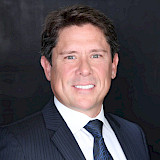
Hunter Newby
Founder, Newby Ventures
Entrepreneur, investor, and interconnection pioneer. Co-founded Telx, conceived the carrier-neutral Meet-Me-Room, and led data center development across the U.S. Now investing in network-neutral infrastructure through Newby Ventures.
Read more about Hunter →